


Monaco Blue Initiative: Princess Charlene & Prince Albert Foundations join for the Ocean.

Since its establishment in 2010, Monaco Blue Initiative has been considered as an exclusive think tank dedicated to ocean conservation and governance, bridging the gap between scientific research, decision-making, and financial action to build up a fully Sustainable Blue Economy. This year's edition marked a new achievement!
On Wednesday, May 27, 2026, Princess Charlene of Monaco Foundation and Prince Albert II of Monaco Foundation officially signed an unprecedented partnership at the Oceanographic Museum of Monaco. This collaboration will harness the universal power of Sport to promote ocean conservation and raise public awareness. This historic agreement was officially signed by Anne Boggio, CEO of the Princess Charlene of Monaco Foundation, and Romain Ciarlet, Vice-Chairman and CEO of the Prince Albert II of Monaco Foundation, in the presence of Their Serene Highnesses Princess Charlene and Prince Albert II of Monaco.
The 17th edition of the Monaco Blue Initiative gathered representatives from 24 nationalities and 88 organisations, with 43% of participants coming from the private sector. Across six solution-oriented workshops and contributions from thirty high-level speakers, participants explored how to turn political ambition, scientific expertise, and financial mobilisation into measurable action for the Ocean.

By bringing together these two most popular Monaco's Princely Foundations, a proactive bridge was formed between their respective missions, notably:
The Prince Albert II of Monaco Foundation: governance, knowledge, and protection of the world's oceans.
The Princess Charlene of Monaco Foundation: using sport, education, and drowning prevention to foster solidarity and self-improvement.
During her opening address, Princess Charlene of Monaco highlighted how Sport and Nature can act in tandem. The Crossing, the Guinness-record sea crossing that will be taking place in June, aims at inspiring engagement, promoting the protection of the Mediterranean Sea, and testifying that human achievement and environmental responsibility can move forward together. This unique sport challenge was named "Together Crossing for the Pelagos" referring to the Pelagos Sanctuary, the largest inter-state marine area (87,500 km²) dedicated to protecting marine mammals. On June the 19th and the 20th, the extraordinary 225-km water bike will relay from Viareggio Yacht Club (Versilia's Riviera, Tuscany, Italy) to Monaco's Larvotto Beach.
More than just an athletic feat, The Crossing is a powerful mouvement designed to test human endurance while shining a light on vital social and environmental causes. Athletes will navigate a challenging 225-kilometre relay from Italy to Monaco, rotating day and night to cross the Ligurian Sea.
H.S.H. Prince Albert II of Monaco, welcomed this meaningful cross-foundation cooperation, showcasing the decisive role of philanthropy in finding solutions to current challenges. Investing in the Ocean, in fact, is no longer just a responsible choice, but a profitable one, with oceans rapidly becoming a primary asset class.
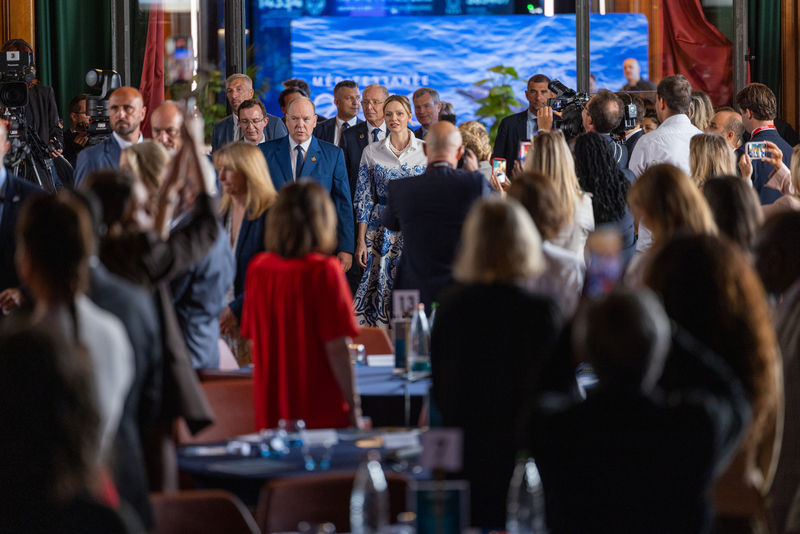
The Monaco Blue Initiative 2026 - MBI 2026 - centred on converting ocean protection into actionable financial solutions integrating marine science with advanced financial tools. Reaffirming its role as a major platform for debate on Sustainable Blue Economy transition, MBI 2026 highlighted the need for a simple, comprehensive, and standardised governance framework to scale Blue Finance, keeping local communities central to decision-making together with scientific, traditional, and indigenous knowledge.
Not by chance, participants underlined that the success of the BBNJ (Biodiversity Beyond National Jurisdiction) Agreement, also known as the High Seas Treaty, relies on cooperation, information sharing, common rules, and science-based approaches to conservation. Financial Equity and benefit-sharing are essential elements to create private sector opportunities and de-risk ocean investments. As an example, the Special Fund for BBNJ is a dedicated financing mechanism established under Article 52 the Agreement to ensure fair, predictable financial resources to help developing state parties implement the treaty, build capacity, and transfer marine technology.
MBI 2026 has equally focused on International Cooperation to allow Developing Countries and Small Island Developing States (SIDS) actively participate in Blue Economy and Governance discussions, in order to find practical, accountable and scalable outcomes validated through a scientific contribution. ***

✒️ Maurice Abbati
Strategic Communication Specialist, Editor in Chief, Journalist, Executive.
Lecturer and Author in English in the field of Environmental Communication to foster Circular and Blue Economy


Comments